
A central kitchen, a fried snack maker, or a frozen vegetable plant that runs a processing line depends on clean washing, sharp cutting, and steady drying to avoid stops. The vegetable processing line equipment list for a food plant covers cleaning, peeling, cutting, blanching, draining, and drying, and most issues start in those stages. This article explains the common problems and the checks that keep a food production line running.
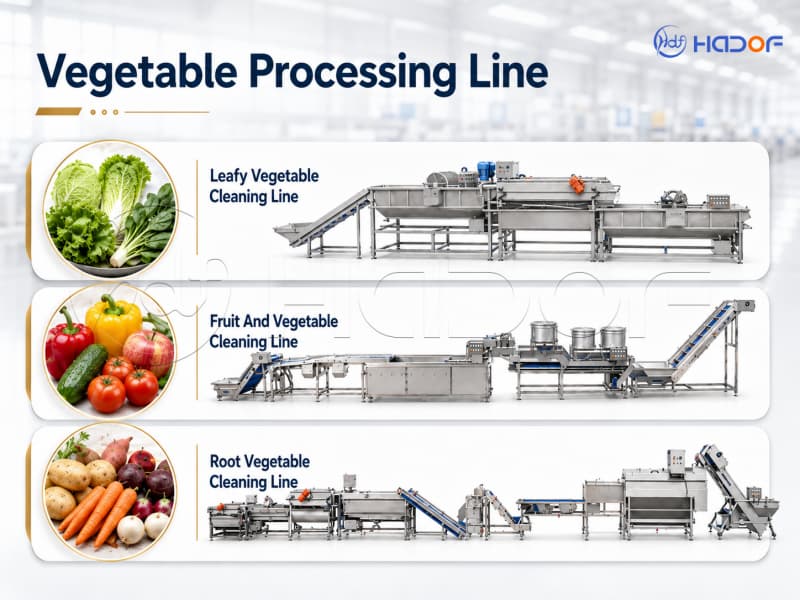
How Do Cleaning and Filtration Issues Stop the Line?
The washing machines use bubble tumbling and sediment drainage, so blocked filters or a full tank return dirt to the produce. The automatic vegetable processing line with washing and cutting needs the overflow and the drain checked daily. A clean water keeps the food handling quality and the line steady.
How Does Moisture Control Affect the Quality?
The vibrating drainer and the air dryer remove the surface water, and a blocked drainer or a dirty dryer leaves the product wet. The industrial vegetable line equipment for maintenance needs the airflow and the drainage checked every shift. This control is the food manufacturing step that protects the frying and the freezing.
How Does Blade and Belt Wear Affect the Line?
The cutter blades and the conveyor belts wear with use, and a dull blade or a loose belt changes the cut and the speed. A plant that inspects these on a schedule keeps the food preparation size consistent. This care protects the food equipment uptime and the yield.
How Does the Line Connect With Washing Equipment?
A processing line works best when the machines before and after the blanching keep a matched pace. The line connects with a fruit and vegetable cleaning machine for a line, a blancher, and a dryer. A smooth connection keeps the food processing system moving.
How Should a Plant Schedule Maintenance?
Vegetable processing runs continuously, so a planned stop for the filters, the blades, and the belts costs less than a failed line. You can review the vegetable processing line manufacturer before a purchase, because spare parts decide how fast the line returns. A fixed routine turns the food machinery decision into dependable uptime.
How Does the Line Reduce Water and Labor?
The circulating water tank and the filtration reduce the water replacement and the manual handling, so the plant washes more with less water and fewer workers. This efficiency is the food production saving that a well maintained line delivers. A buyer who checks the water and the labor first makes a more complete food machinery decision. This saving repeats every shift across the whole line.
Conclusion
The most common vegetable processing line issues are blocked filters, wet product, and worn blades or belts, and a plant prevents them with a fixed cleaning and inspection schedule. These habits keep the food production line running. A well maintained line therefore stays productive across the full shift. A clean line also keeps the product color even from the first batch to the last. If you have interests, you can learn more about https://www.friedfoodsolutions.com/vegetables-processing-line/