
A salad factory, a central kitchen, or a fresh-cut vegetable plant that slices, shreds, or chops lettuce, spinach, cabbage, and celery usually replaces hand cutting once order volume grows. The leafy vegetable cutting machine for a food factory turns washed greens into uniform pieces with a rotating knife group, and the right model depends on capacity, cut style, and line fit. This article explains the factors a buyer should check before selecting equipment for a food processing plant.
Which Capacity and Cutting Styles Does a Leafy Vegetable Cutter Offer?
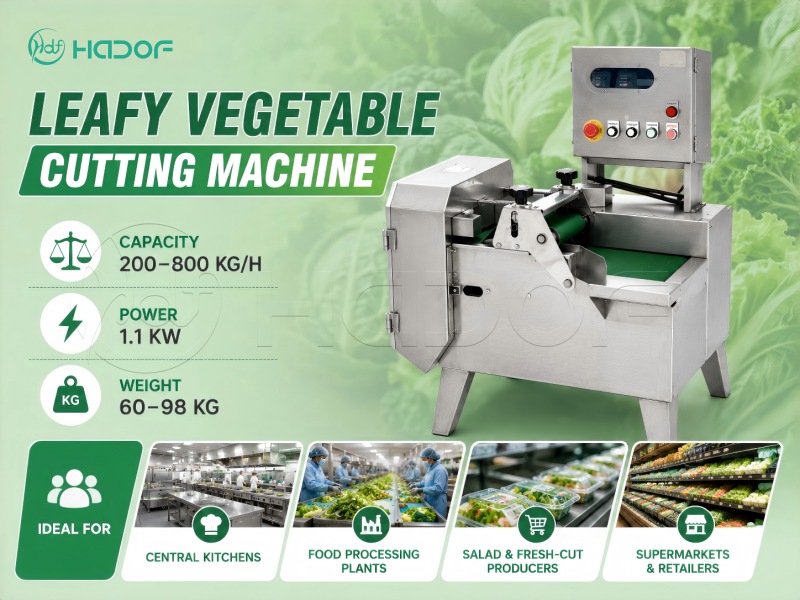
Capacity and cut style decide how the machine fits the menu, because a salad line and a stir-fry kitchen need different outputs and shapes. Model 802 processes about 300 to 800 kg/h while Model 803 handles about 200 to 500 kg/h, and both machines replace roughly five to ten manual workers. The commercial leafy greens cutting machine with slicing and shredding supports slicing, shredding, and segment cutting, so one unit serves several recipes. A buyer who matches capacity and cut style avoids a food manufacturing bottleneck later.
How Does Adjustable Speed Control Leafy Vegetable Size?
The frequency inverter sets the belt and knife speed, and that setting decides how long each leaf stays in the cutting chamber. The stainless steel leafy vegetable cutter for salad and central kitchen lines produces a consistent size across a batch, which keeps salad portions and cooking times even. Washed lettuce, spinach, cabbage, and celery move from the conveyor inlet through the knife group and out the discharge chute without hand trimming. Consistent cutting therefore protects both the food preparation quality and the yield that a buyer measures.
How Does the Cutter Connect With Washing and Drying Equipment?
A cutting machine works best when clean, drained leaves arrive on the belt and the cut pieces leave directly to the next stage. The line connects with a leafy salad processing line with washing and cutting, and many factories add a second washing or drying unit after cutting. Each handoff needs a matched height and speed, because a manual transfer reintroduces labor and moisture. A well connected line keeps the food processing system moving from wash to cut to pack without a pile-up.
How Should a Buyer Compare Models for Space and Safety?
Space and safety matter as much as capacity, because a compact machine leaves room for washing and packing nearby. Model 802 measures about 850 by 580 by 1140 millimeters while Model 803 measures about 730 by 560 by 910 millimeters, so both fit a central kitchen or a small factory. The control panel and emergency stop keep operation simple, and protective covers reduce the risk around the knife group. A buyer who checks these dimensions and guards avoids a food equipment choice that crowds the floor or slows training.
How Should Buyers Verify a Supplier Before a Food Machinery Purchase?
Salad greens processing rewards a supplier that documents hygiene and service, because the knife group and belt need regular cleaning and spare parts. You can review the leafy vegetable processing equipment manufacturer before a purchase, and that review shows the food-grade stainless steel construction and after-sales support. A careful buyer asks for a trial with its own greens and a clear cleaning routine. These steps turn the food machinery decision into a dependable investment.
Conclusion
A buyer selects a leafy vegetable cutting machine by matching capacity and cut style, checking speed control and size consistency, and confirming the washing and drying connections around it. These checks protect yield and keep a food factory productive. If you have interests, you can learn more about https://www.hadofps.com/products/leafy-vegetable-cutting-machine/